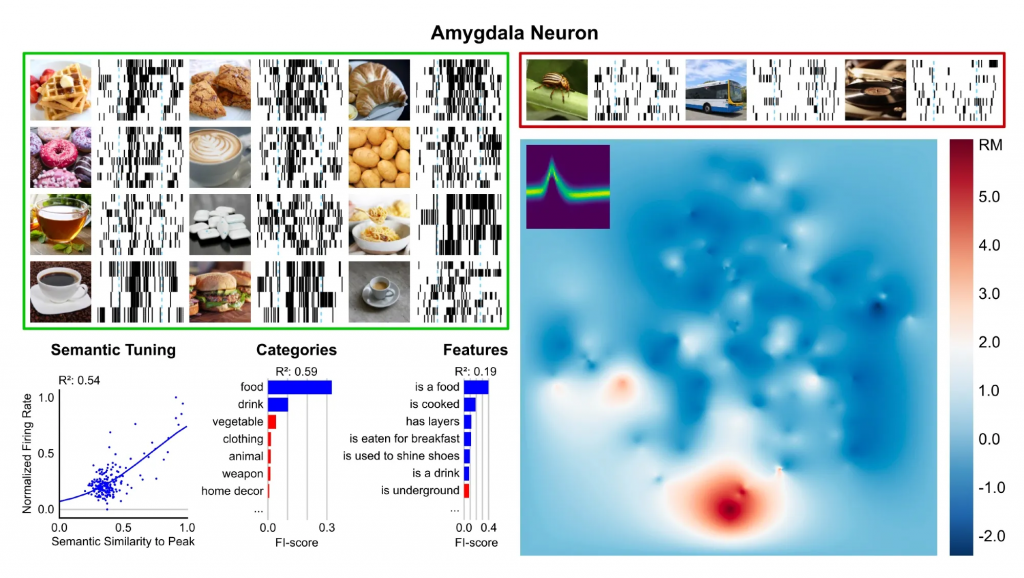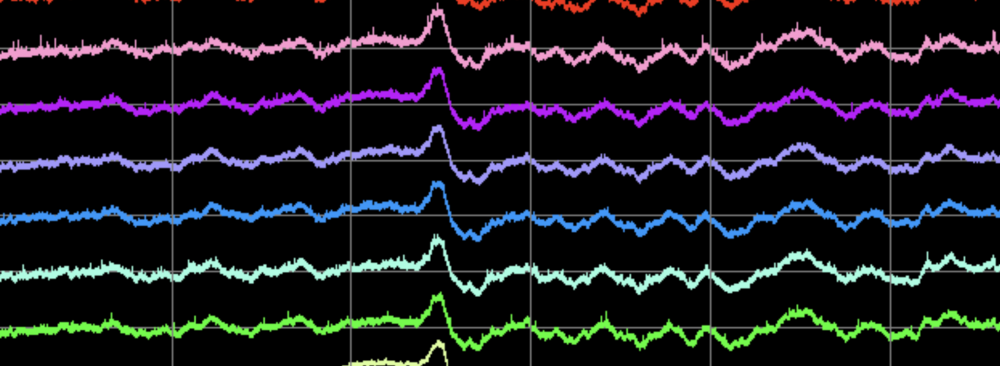
How do human neurons encode meaning? In this work, led by Katharina Karkowski, we recorded hundreds of human MTL neurons to study semantic coding in the human brain:
https://www.biorxiv.org/content/10.1101/2025.10.21.682935v1
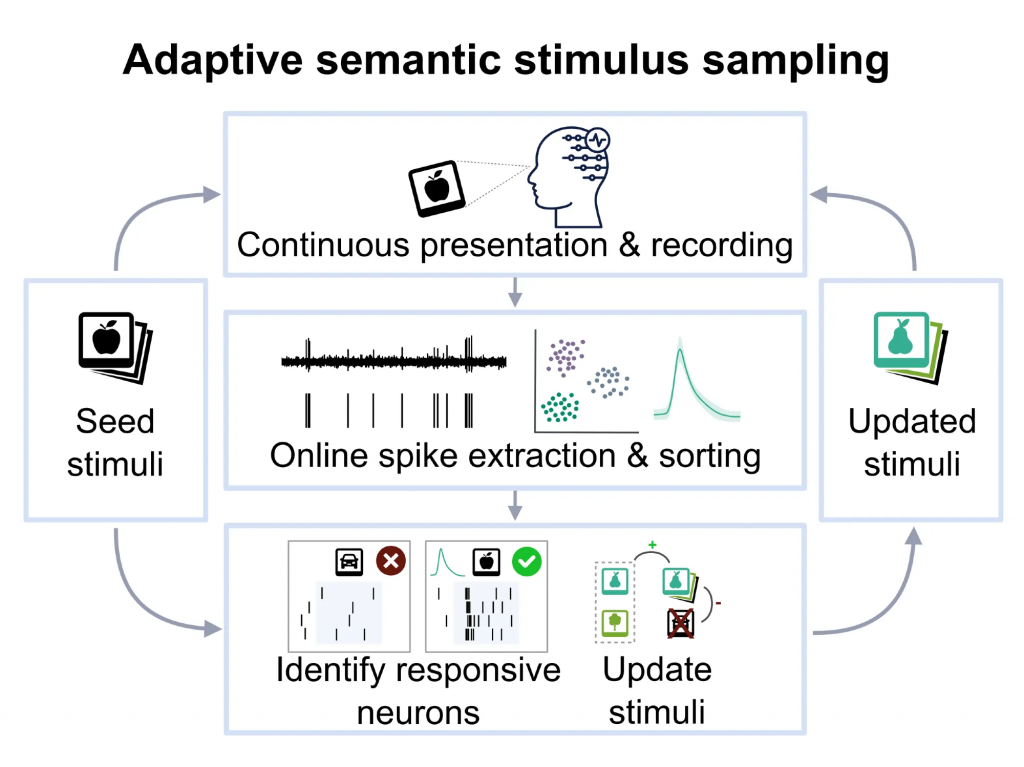
The discovery of concept cells sparked debate about binary vs distributed coding. Here, we developed a closed-loop algorithm that adaptively presents images semantically related to response-eliciting stimuli to explore the semantic tuning of MTL neurons.
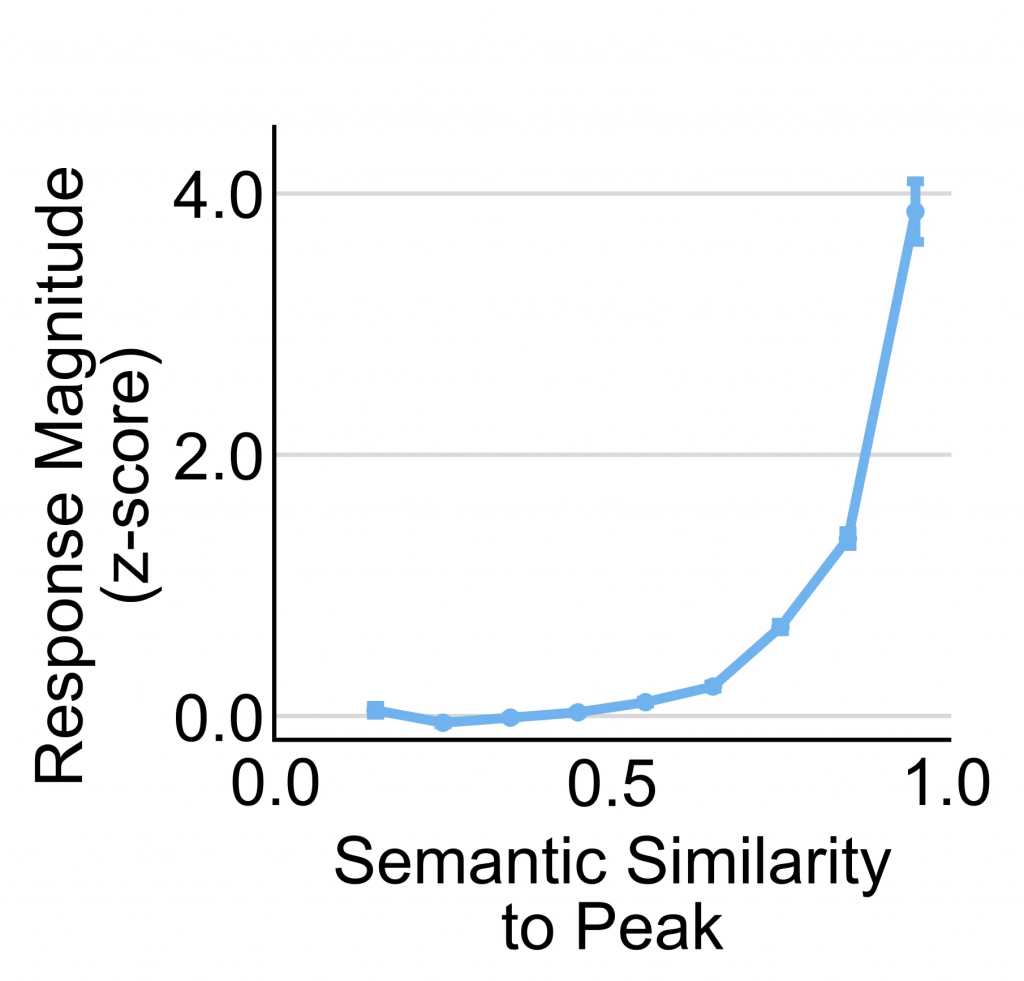
Neuronal tuning curves are core coding principles in neuroscience (e.g., in vision and audition). They can vary in width and steepness. Using semantic embeddings and standardised image sets (THINGS), we presented items at controlled semantic distances to map the local semantic vicinity.
Human MTL neurons exhibit semantic tuning, with graded responses that follow narrow and steep tuning curves (steepest in hippocampus). Neurons preferentially respond to semantically related stimuli, and their firing rates correlate with semantic similarity to preferred stimuli.
This example amygdala neuron responds to several food- and drink-related items but not to unrelated items (such as the bus).